Back to portfolio

Healthcare

Solution Blueprint

Representative solution design. Results depend on deployment.

AI Physical Therapy Coach

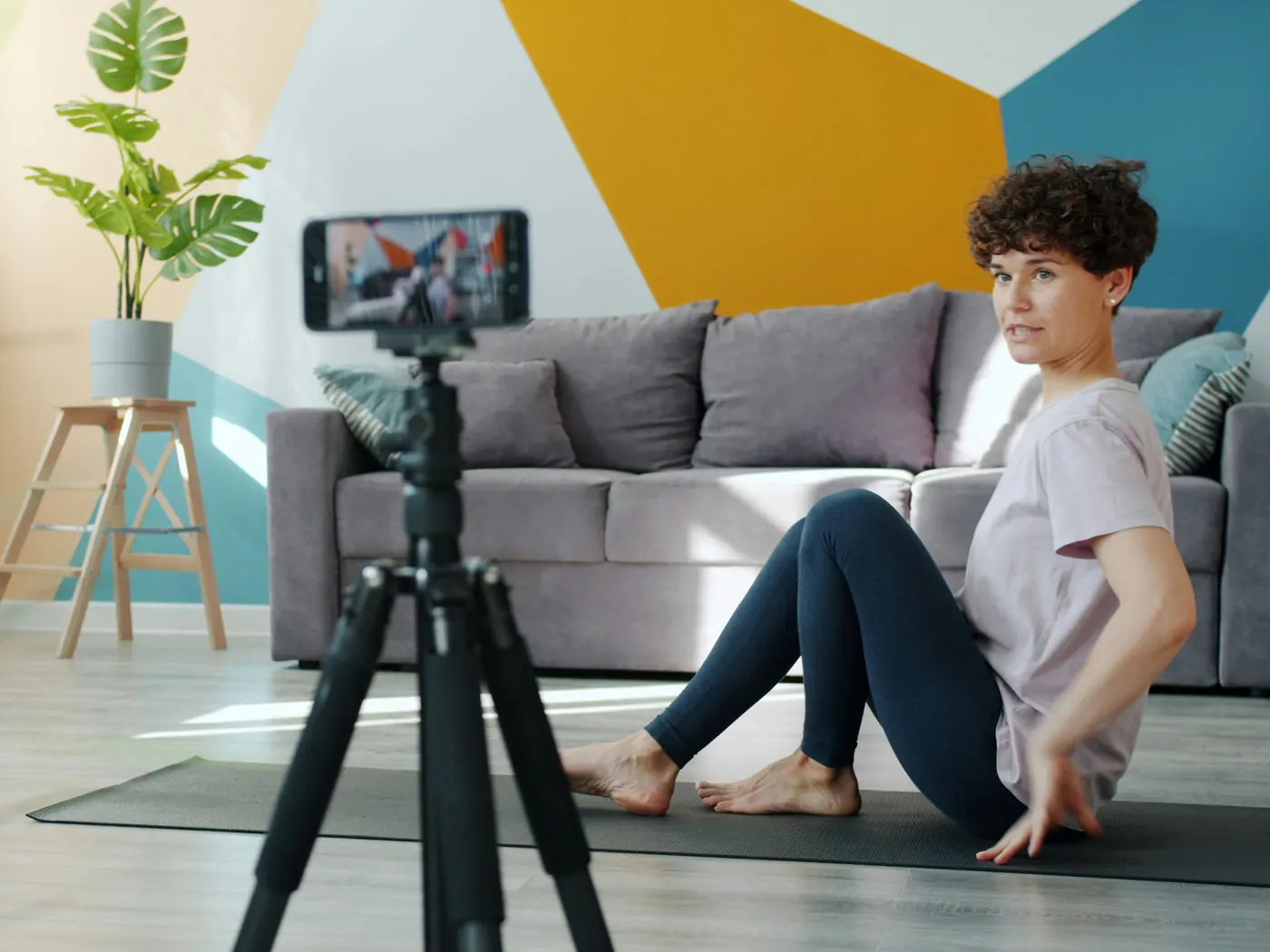
An exercise coach that uses the camera on a phone or tablet. It watches patients do their home exercises, counts each one and helps them fix their form as they go.

  • Every rep

    Counted and checked

    Each repetition is counted and compared with the rules for that exercise.

    By design, not a measured result
  • Instant

    Tips while you move

    Spoken or on-screen tips help patients fix their form during the exercise.

    By design, not a measured result
  • Therapist

    Reviews every session

    A summary of each session goes to the care team to check.

    By design, not a measured result

Key details

A camera-based assistant that guides patients through home exercises and reports back to their therapist.

Challenge
Patients often do home exercises the wrong way, and therapists can't see what happens between visits.
Solution
The camera follows how the body moves, counts each repetition, corrects form on the spot and sends a summary to the care team.
Technologies & tools
AI that recognizes body positions from a camera, exercise rules your therapists set, a phone or tablet app, and secure storage for progress reports. Full details are in the technical section below.

In short

Axiomra designed an exercise assistant for physical therapy at home. It uses the camera on a phone or tablet to follow the patient's body as they move.

It checks how well each movement is done, counts repetitions and gives instant tips to correct form. Therapists get a clear summary of every session.
A typical situation

A rehabilitation and digital health provider wanted to take its therapist-led exercise programs into patients' homes. The aim was to support patients between visits, without a therapist watching every session live.

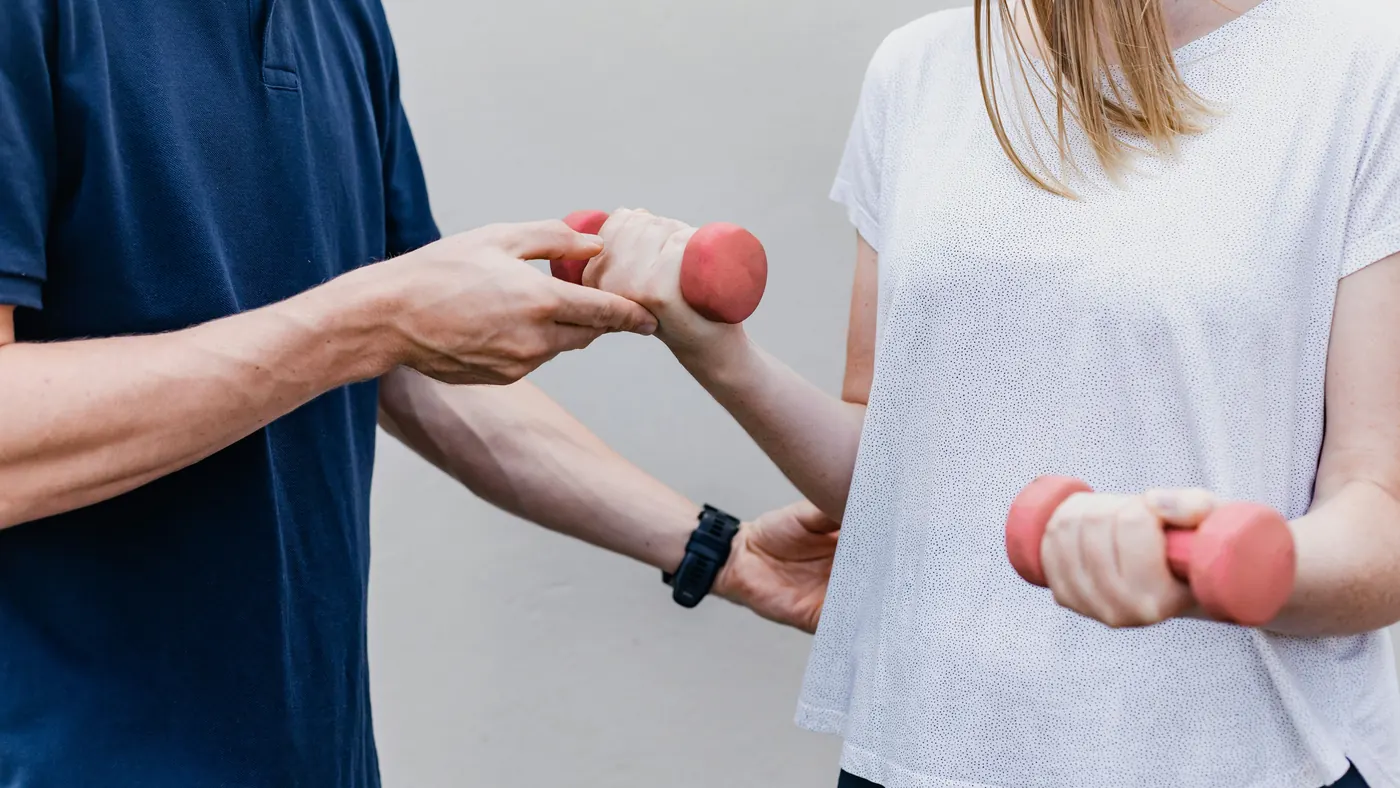
A physiotherapist guiding a patient's arm as she lifts a small dumbbell
Photo: Sincerely Media / Unsplash

The problem

  • Wrong form at home. Patients often did their exercises with poor form, or lost count of their repetitions.
  • No view between visits. Therapists had little idea what patients actually did between appointments.
  • Wearables miss the full picture. Devices worn on the wrist or body could not reliably judge full-body posture or how well a movement was done.
  • Everyday phones, private homes. It had to work on ordinary phones and tablets, and keep patients' privacy safe.

What we built

  • The app finds key points on the body, such as shoulders, hips, knees and ankles. From these it measures joint angles, how far the patient can move, the speed of each movement and each full repetition.
  • Each exercise has its own rules, plus small AI checks that spot common mistakes. The patient hears or sees a correction right away.
  • After each session, a summary shows what was completed, how well it was done, whether the patient kept to the plan and which repetitions need a closer look. The therapist reviews it.
  • Where possible, the video is processed on the phone itself. Feedback stays fast, and raw video doesn't need to leave the device.

How it works, step by step

  1. 1

    The patient picks an exercise

    They choose one of the exercises their therapist has prescribed.

  2. 2

    The camera finds the body

    It picks out key points like shoulders, hips and knees as the patient moves.

  3. 3

    The app measures the movement

    It works out joint angles and which part of the exercise the patient is in.

  4. 4

    Each repetition is counted and checked

    Every repetition is counted and compared with the rules for that exercise.

  5. 5

    Instant tips fix the form

    Spoken or on-screen tips help the patient correct the movement straight away.

  6. 6

    Human checkpoint

    The therapist reviews the session

    A summary goes to the care team, so the therapist can follow progress and adjust the plan.

What changes for your team

What this setup is designed to change:

  • Patients get form corrections in real time during home exercise sessions.
  • Therapists get clearer, more objective progress information between appointments.
  • Less counting of repetitions by hand, and a clear view of whether patients keep up their exercises.
  • A way to extend therapist-led care to more patients, without adding live sessions.

How we keep it safe and reliable

  • People stay in charge

    Therapists make the final call on high-impact, regulated or unclear cases, and whenever the system is unsure.

  • Security built in from day one

    Only the right people can see data, every action is recorded, and privacy is planned in from the start, not added after launch.

  • Judged on real results

    We measure how accurate the system is and how much it helps patients and therapists. The goal is better care, not just a smarter AI.

  • Watched after launch

    Once live, the system is monitored and feedback is collected. Careful updates keep it accurate as patients and exercises change.

Why Axiomra

Axiomra brings together AI, data, systems integration and ongoing oversight. That turns this idea into a working tool that fits your existing systems and the way your team works.

TagsHealthcarePhysical TherapyComputer VisionHome RehabilitationTherapist Review
Under the hood (for technical teams)

Tools & technology

Technology stack by layer
LayerTechnology / Approach
Seeing body movementMediaPipe or a custom pose model, OpenCV
AI modelsPyTorch, TensorFlow Lite or Core ML (running on the phone)
The appiOS and Android, native or cross-platform
Behind the scenesPython APIs, secure store for patient progress data
ReportsDashboards for adherence, range of motion, repetitions and movement quality

More case studies

Want your patients' home exercises done right?

Tell us which exercises you prescribe and how you follow up with patients today. We will show what a camera-based coach can check at home, and where your therapists stay in charge.

Talk to our team