

Computer Vision Development

Computer Vision Developmentfor Your Business Operations

Axiomra builds computer vision systems that read images, video, and camera feeds and turn them into information your team can act on. We assess what your existing cameras and data can support, agree accuracy and latency targets before development, and deploy to the edge or the cloud to suit your environment.

4.9 from 500+ companiesReviewed on Clutch
Face landmarks0.981
Capability
Detection and Tracking
Capability
Image and Video Analytics
Capability
Edge and Cloud Deployment

Tools and frameworks we work with

  • OpenCV
  • PyTorch
  • TensorFlow
  • YOLO
  • Detectron2
  • ONNX Runtime
  • NVIDIA TensorRT
  • MediaPipe

Working with visual data

Turn Visual Data Into Information You Can Use

Most organisations record far more visual material than anyone can review: camera feeds, scanned documents, inspection photos, and product imagery. Much of it is checked by a person, and some of it is never checked at all.

Common problems we are asked to solve:

  • Manual Visual ReviewChecking frames, photos, or scans by hand takes time and produces different results between people and shifts.
  • Limited Real-time VisibilityA defect, an obstruction, or a growing queue is often identified after the point where action would have helped.
  • Identity Checks That Can Be DefeatedVerification that relies on a static image can be passed with a printed photo or a replayed video.
  • Operational Data That Goes UnmeasuredFootfall, dwell time, shelf gaps, and safety compliance are not recorded because nobody has time to review the footage.
  • Approaches That Do Not ScaleA setup that works on a handful of cameras can become unreliable or too costly to run across a larger estate.

We design computer vision systems around your workflow and the equipment you already have, covering identity verification, document processing, inspection, and monitoring. Scope, accuracy targets, and the points where a person reviews an output are agreed with you before development begins.

Book a Free Consultation
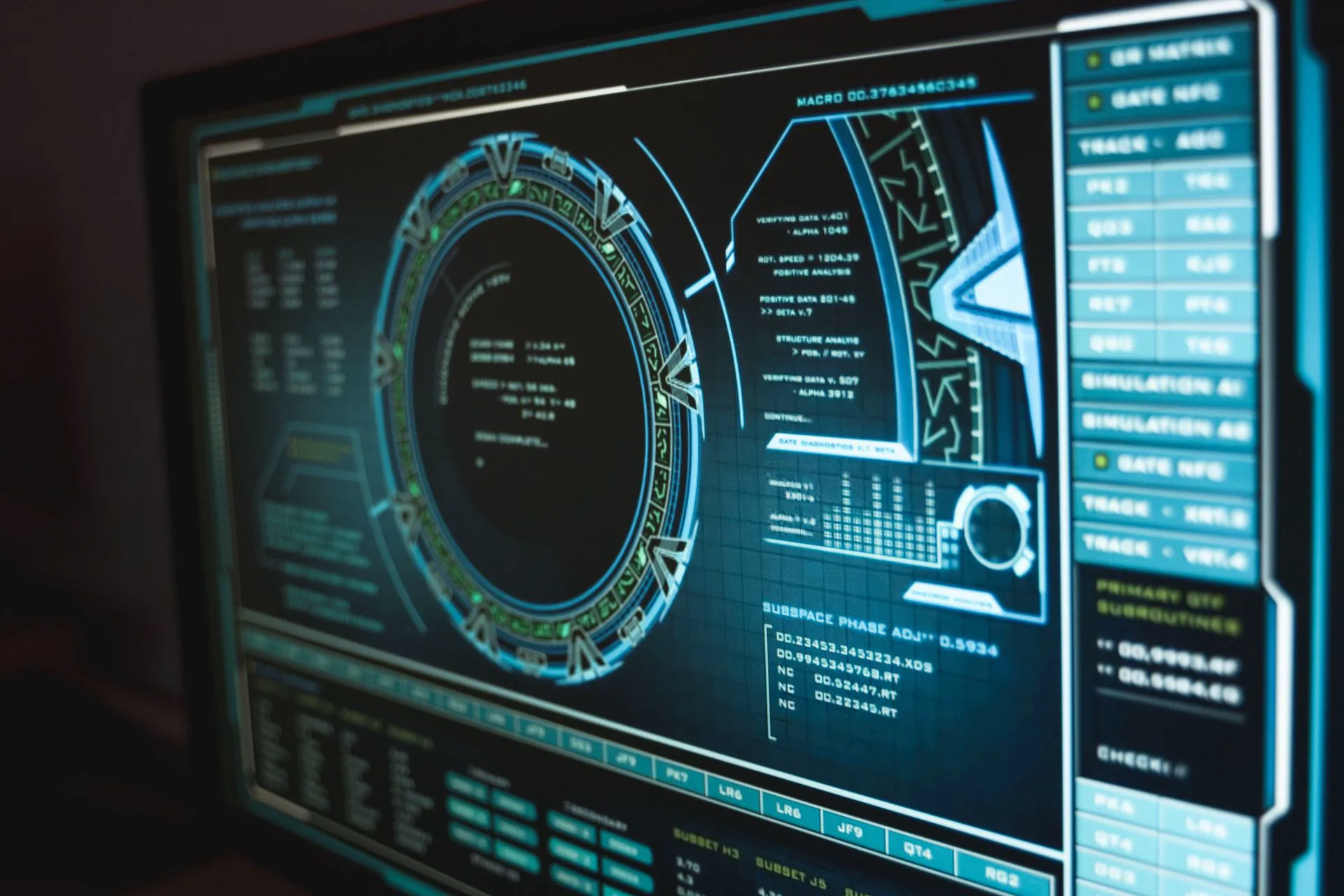
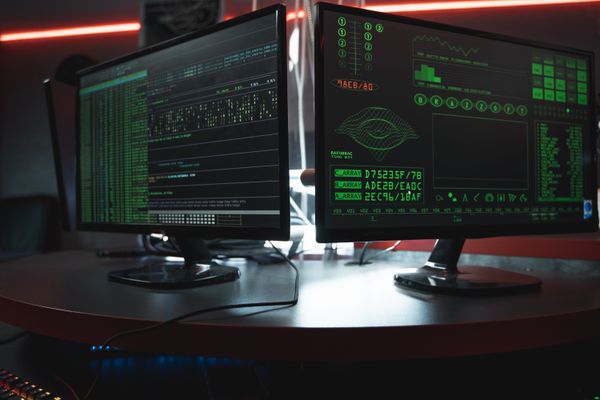
Dark monitoring room with terminals streaming live camera analysis output

Live monitoring, not after-the-fact review

Capability
Automated Review
Capability
Continuous Monitoring
Capability
Cross-industry Delivery

What we deliver

Computer Vision Services From Assessment to Deployment

We support every stage of a computer vision project, from the first feasibility question through to a system your team operates. Each service is scoped around your business problem and the data you hold.

01

Computer Vision Consulting

We review your business goals, the visual data you already hold, and your technical setup, then set out what can realistically be built. You receive a prioritised list of use cases, an assessment of whether your data supports them, and a roadmap with estimated effort, cost, and dependencies.

  • Prioritised use cases
  • Data readiness assessment
  • Build or buy assessment
  • Roadmap with estimates
Consultants reviewing charts and a roadmap on a whiteboard during a scoping workshop

Our computer vision capabilities

Computer Vision Capabilities for Your Use Case

Each capability below can be delivered on its own or combined into a larger system.

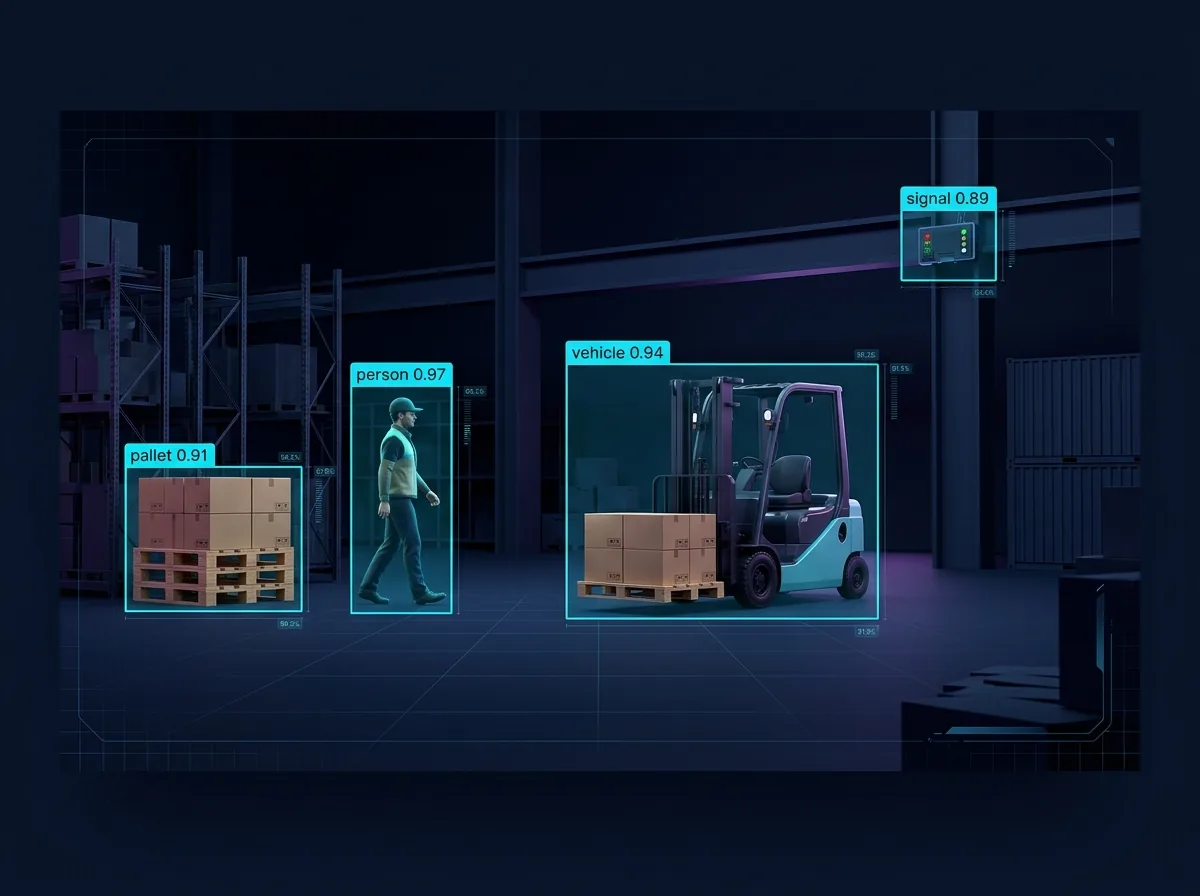
Warehouse camera feed with detected items outlined by bounding boxes
01

Object Detection

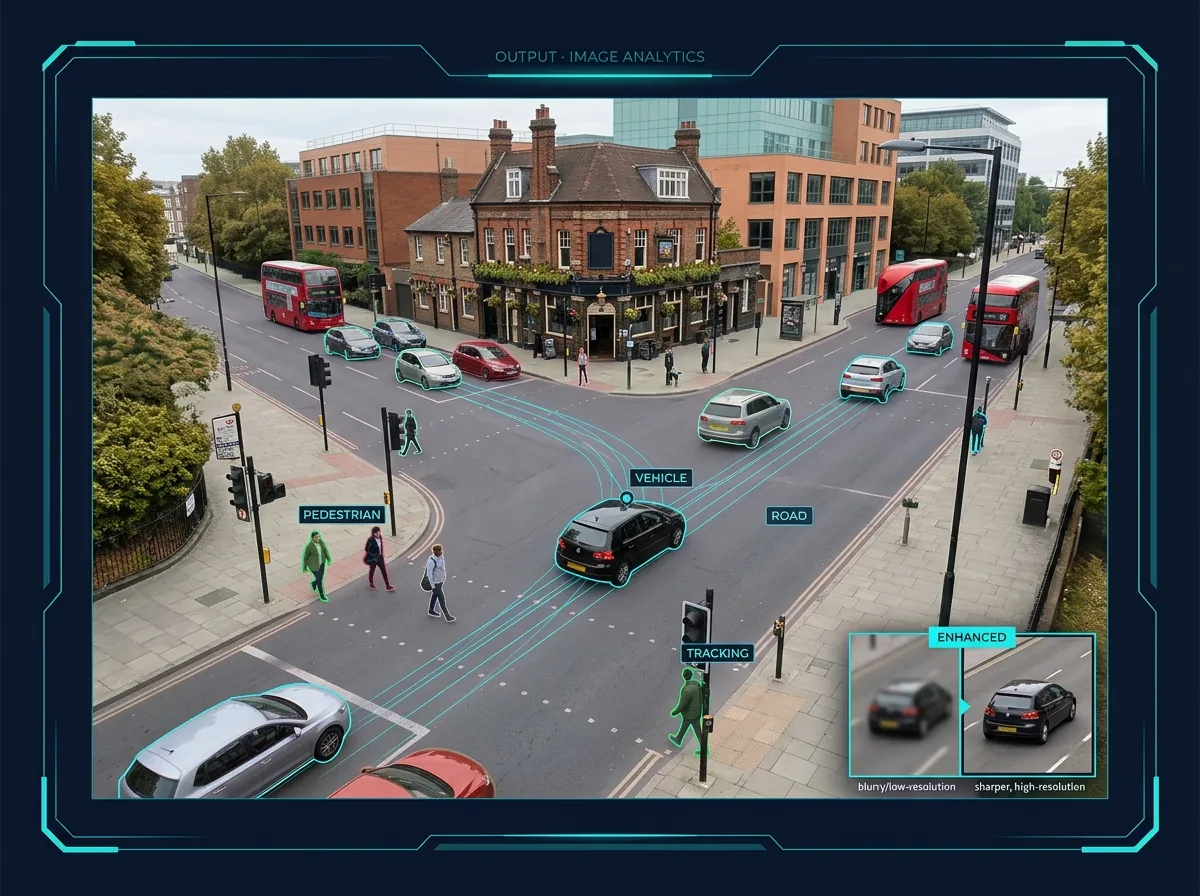
Identify, locate, and track objects in images and video streams, with a confidence score attached to every prediction. We build detection systems for quality control, security monitoring, inventory management, and logistics, tuned to the cameras and lighting already installed on your sites. Models are trained on your own footage rather than generic public datasets, so they learn the parts, packaging, and edge cases your operation deals with. Inference runs at the edge or in the cloud, chosen against the latency and bandwidth your environment allows.

  • Real-time object detection and classification
  • Bounding box annotation and labeling
  • Quality inspection and defect detection
  • Security threat analysis
  • Livestock and asset counting
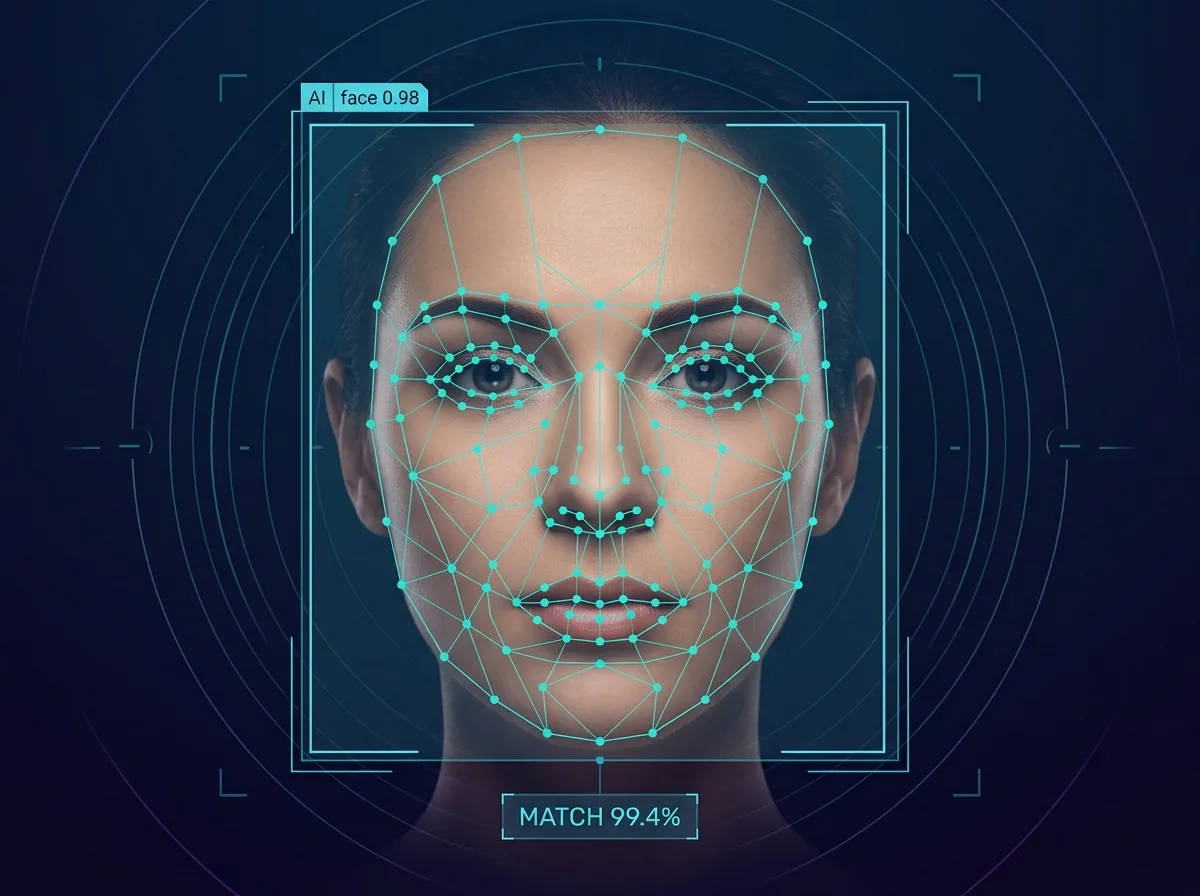
Face captured by an access-control camera during identity verification
02

Facial Recognition

Facial recognition for identity verification, access control, and customer analytics, tested across the lighting conditions, camera angles, and coverings your sites actually see. Matching pipelines are sized to your enrolled population, from a single door reader upwards. Liveness checks run ahead of every match so printed photos, screen replays, and synthetic video are rejected before a comparison is made. Templates are encrypted and stored as vectors rather than images, and the applicable biometric and privacy requirements are reviewed with your team before deployment.

  • Face matching and verification
  • Biometric identification
  • Liveness detection (anti-spoofing)
  • Know Your Customer (KYC) compliance
  • Real-time facial recognition
  • Facial emotion detection
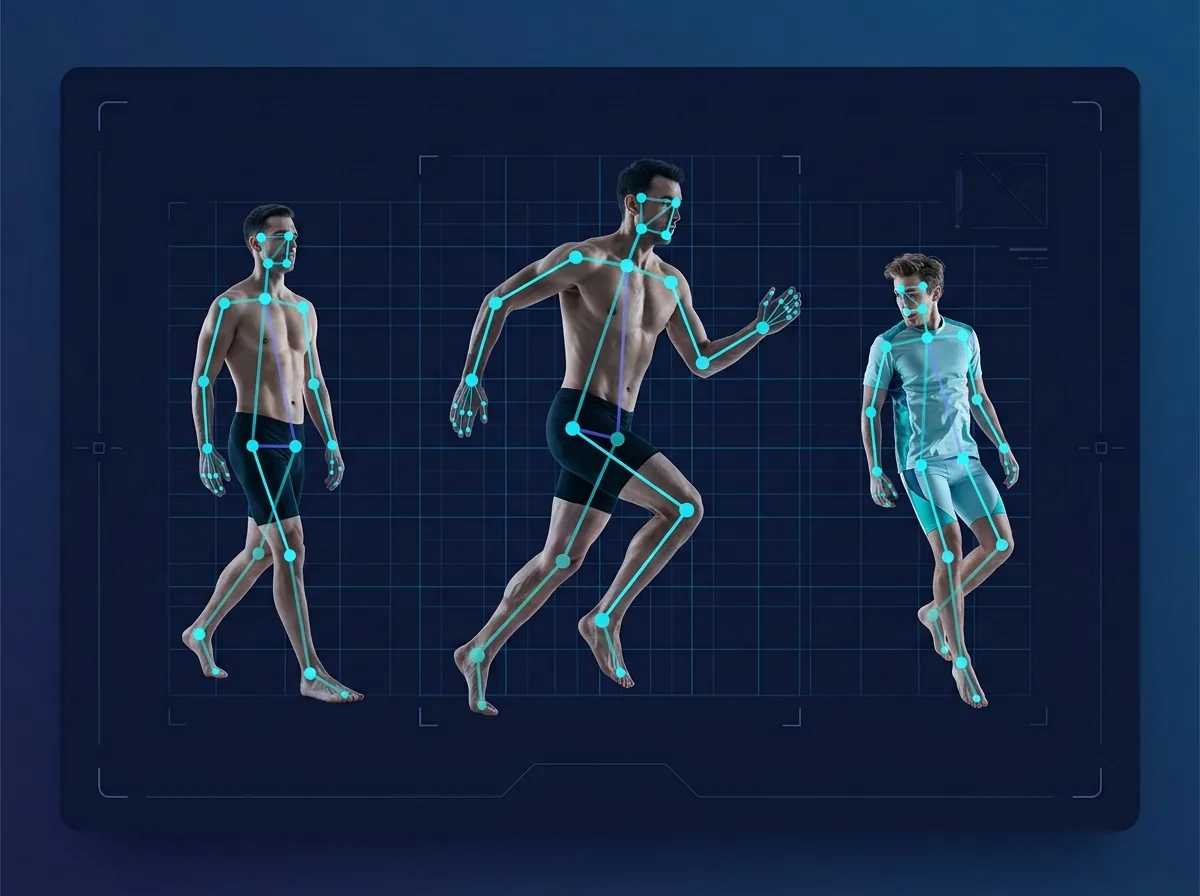
Person tracked by a camera while joint keypoints map their posture
03

Pose Estimation

Detect body position, joint angles, and movement over time at keypoint level, from a single camera or a multi-view setup. The same approach supports patient mobility monitoring, physiotherapy progress tracking, sports biomechanics, gesture-driven interfaces, and workplace safety checks. Posture is tracked across frames rather than scored on isolated images, so the system can flag a fall, a repetitive strain risk, or a missed safety step as it occurs. Output is delivered as structured coordinates your own analytics tools can read.

  • 2D and 3D pose estimation
  • Gesture recognition
  • Head pose estimation
  • Body landmark tracking
  • Single and multi-view estimation
  • Skeleton keypoint mapping
Read the AI physical therapy blueprint
High-resolution scan being segmented region by region for inspection
04

Image Analytics

We segment images at pixel level so each region in a frame is classified rather than only enclosed in a box. That level of detail is what medical imaging, autonomous systems, satellite analysis, and industrial inspection require when a pass and a defect differ by a small area. Models are evaluated on overlapping objects, fine boundaries, and low-contrast or noisy source images before deployment. Results are delivered as masks, measurements, and area statistics that feed directly into your reporting.

  • Semantic segmentation
  • Panoptic segmentation
  • Image enhancement
  • Real-time object tracking
  • Medical image analytics
Video wall reviewing movement and behaviour across multiple camera feeds
05

Video Analytics

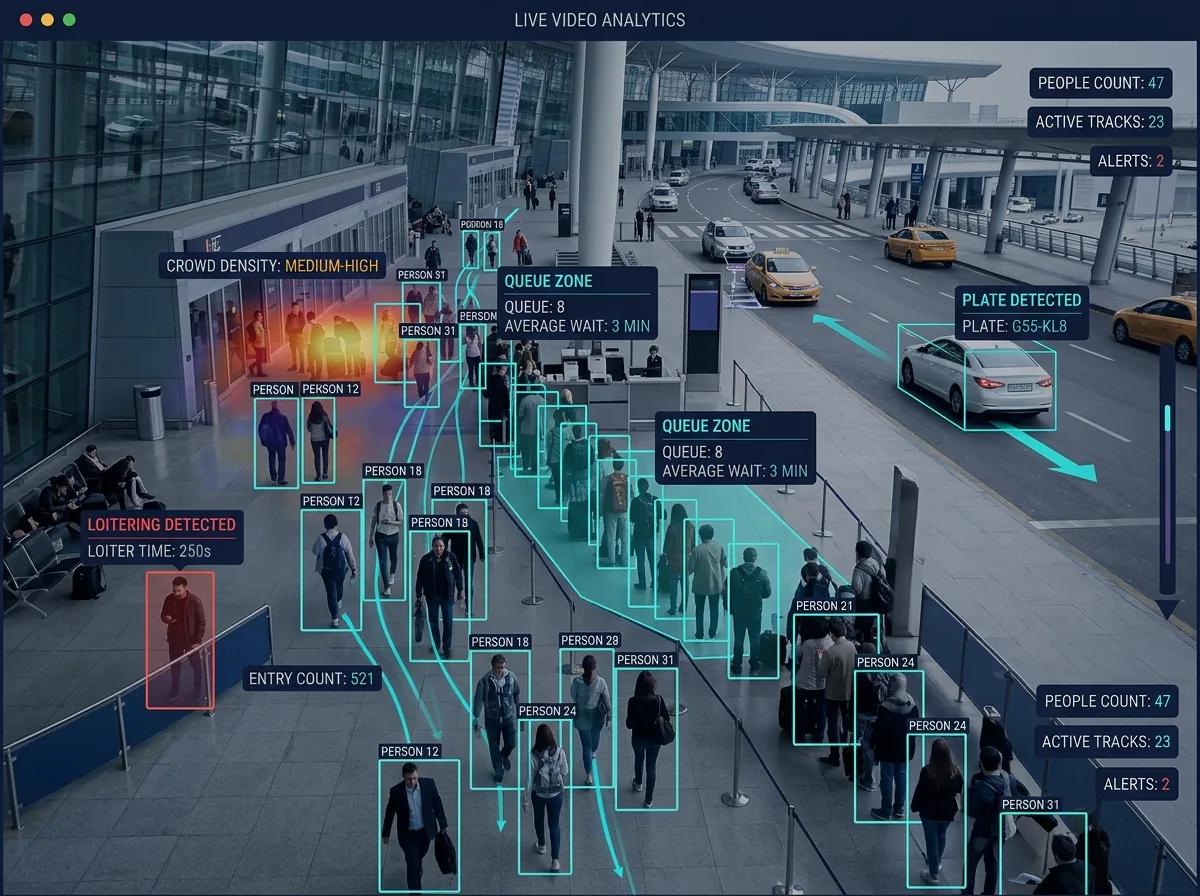
Convert recorded footage into structured data instead of hours of material nobody has time to review. Video analytics monitor behaviour across frames, detect anomalies, count and classify movement, and produce reporting for retail, logistics, transport, and security environments. Because the model reads sequence rather than single frames, it can distinguish waiting from loitering, or a stopped vehicle from a blocked exit. Alerts, dashboards, and search across archived footage are part of the delivery.

  • Queue management and counting
  • Automatic licence plate recognition
  • Scene and behaviour detection
  • Forensic search across archives
  • Crowd density detection
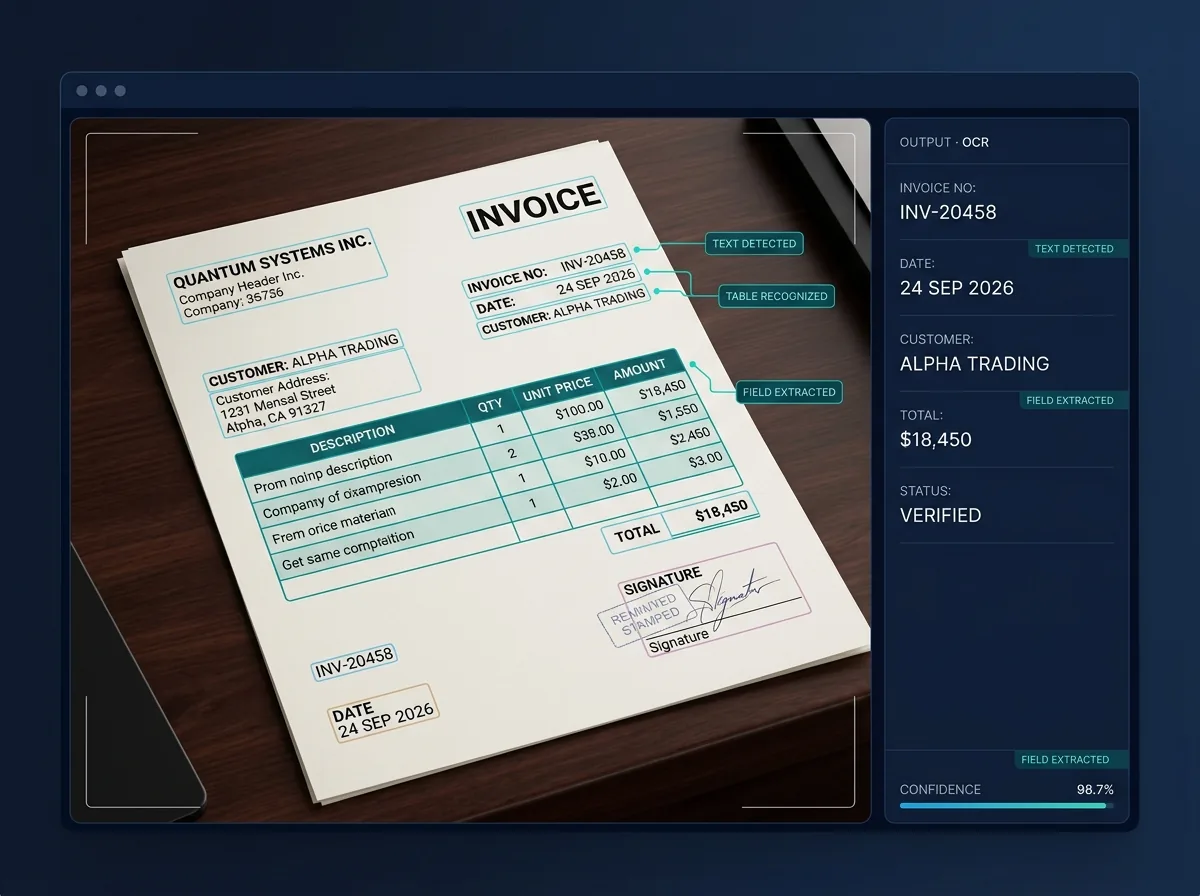
Scanned document being read line by line into structured fields
06

Optical Character Recognition

Extract text from photographs, scanned documents, handwritten forms, and video frames, and return it as structured, searchable data rather than a block of plain text. Models are fine-tuned on your own document types, fonts, and layouts, which generally performs better on specialist material than a general-purpose OCR tool. Tables, multi-column layouts, stamps, degraded scans, and multilingual pages are handled as part of the scope. The output maps to your fields, so downstream systems receive values they can validate rather than text someone has to re-key.

  • OCR clean-up services
  • Document scanning and digitisation
  • Information retrieval from complex files
  • OCR conversion services
  • Microfiche scanning and archival
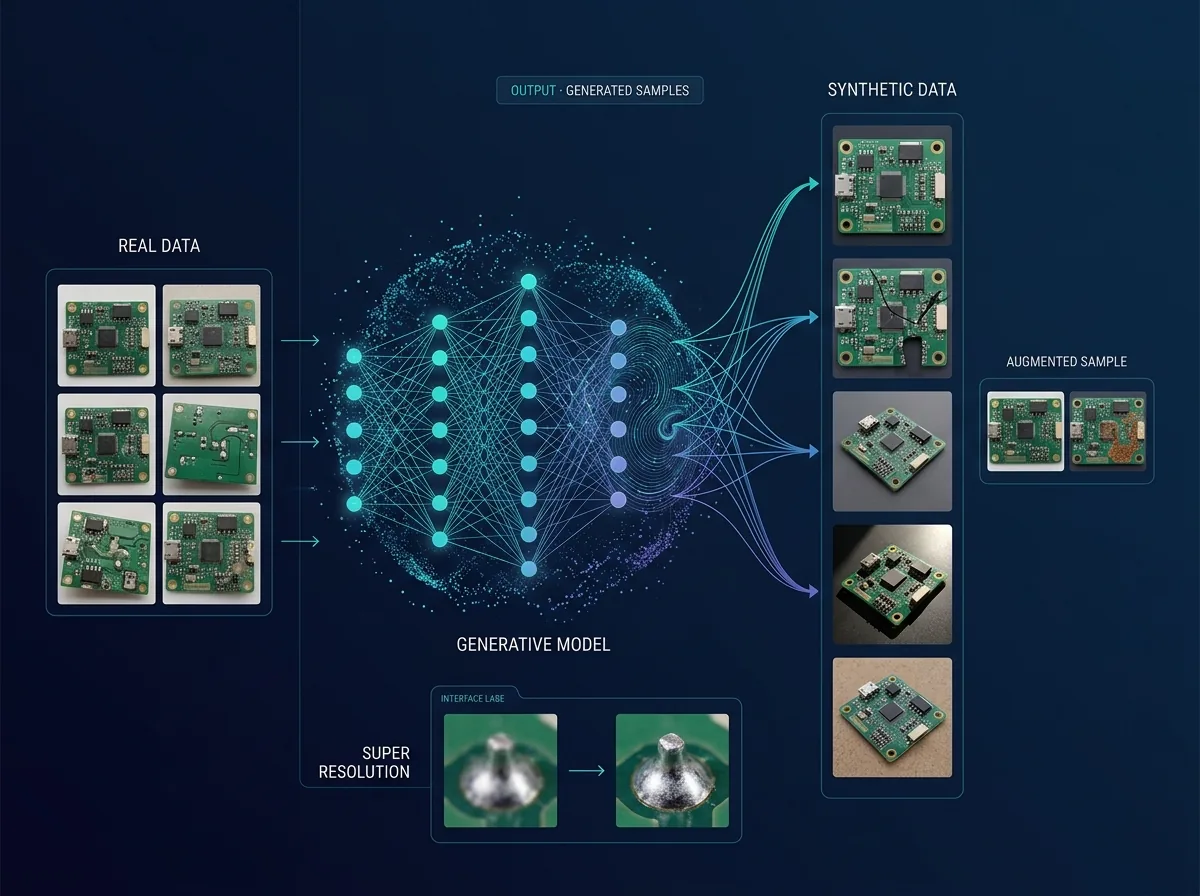
Synthetic imagery generated to fill gaps in a vision training set
07

GAN-Based Image Generation

Generative models are used to create synthetic training data, improve image quality, and produce visual content at volume. This matters most when real examples are limited, costly to capture, or restricted, such as rare manufacturing defects or patient imaging that cannot leave the hospital. Generated samples are balanced against your real data distribution so the model learns uncommon cases without drifting from the conditions it will meet in production. The same techniques cover super-resolution, denoising, style transfer, and augmentation.

  • Synthetic data generation for training
  • Style transfer and visual simulation
  • Image super-resolution and enhancement
  • Data augmentation for vision pipelines

Not Sure Which Service Fits Your Problem?

If you know you have a visual data problem but not which approach solves it, book a free consultation. We will review your use case, set out what is technically possible with the data and cameras you have, and recommend a practical next step.

Book a Free Consultation

Selected projects

Computer Vision Projects We Have Delivered

Examples of computer vision systems we have built. Each began with a defined business problem, an agreed measure of success, and a scope set with the client before development started.

Analyst workstation showing a live vision analytics dashboard in a dark room

Every number below came out of a system that is still running.

Voltox , AI-Powered KYC And Identity Verification

Problem

Voltox needed to replace slow, manual identity verification with a system that could authenticate users by face in real time, support passwordless login, and stop fraud at checkout.

Solution

We built a full computer vision stack with facial recognition, liveness detection, KYC registration, and passwordless authentication. The system encrypts user credentials and flags spoofing attempts in real time.

Identity verification accuracy
99.9%Identity verification accuracy
Of onboarding automated
70%Of onboarding automated
Registration time reduced
30%Registration time reduced
Read the medical imaging solution blueprint

Industries we work with

Computer Vision Across Industries

We build computer vision systems for a range of sectors. Each solution is shaped around the workflows, data types, and regulatory requirements that apply to your industry, which we review with your team during scoping.

Healthcare

Support clinical teams, reduce diagnostic errors, and automate time-consuming manual reviews.

Build solutions for

  • Medical image analysis and diagnostic support (X-ray, MRI, CT)
  • Surgical assistance and real-time guidance
  • Patient monitoring through video and wearable feeds
  • Pathology slide analysis and anomaly detection
  • Hospital safety compliance (PPE detection, fall detection)
  • Chronic disease progression tracking through imaging

Data handling, hosting, and retention for healthcare builds are agreed with your compliance team before deployment.

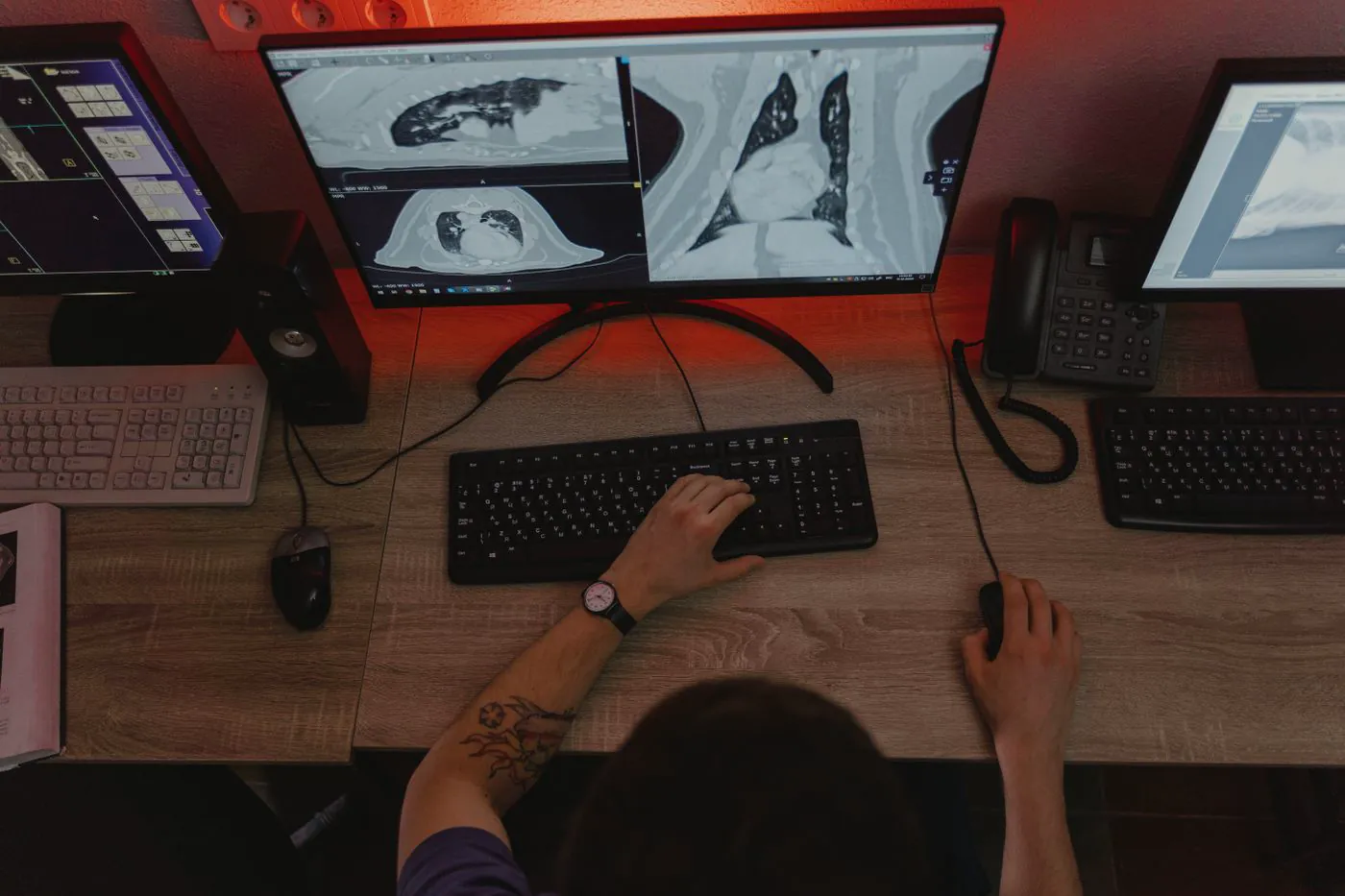
Radiologist reading a set of scans across multiple diagnostic monitors

The models are similar across sectors; the rules around them are not.

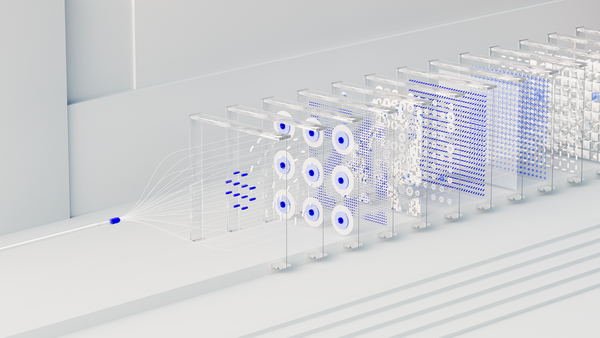
Illustration of a layered neural network pipeline rendered as translucent panels

Technologies we work with

The Technology Behind Your Computer Vision System

Established, well-supported tools across every layer of the build. The selection for your project is made against your data, your hardware, and the people who will maintain it.

The foundation the models are built on. We keep to widely used, actively maintained frameworks so your system remains supportable over time.

  • OpenCV
  • PyTorch
  • TensorFlow
  • Keras
  • scikit-image
  • MediaPipe
  • Albumentations
  • NumPy

How we work

Our Computer Vision DevelopmentProcess

A structured process that takes a project from the first conversation to a system your team operates. Each stage has defined deliverables, a named owner, and an exit condition, so the current state of the work is always clear and nothing is handed over without documentation.

Discuss Your Requirements

Step 1 of 8

01

Discovery And Use-Case Definition

We start with your business problem, not the technology. Together we define what a correct prediction actually means in your operation, what an acceptable error rate looks like in cost terms, and what the system must do when it is not confident enough to decide on its own. We map the people, cameras, and existing tools the solution has to live alongside, and we write down the cases where a human must stay in the loop. That definition becomes the contract every later stage is measured against.

Your Industry Is Not On the List?

The industries above are examples, not limits. Bring us your use case and we will assess what is achievable with the visual data and equipment you already have, and where the gaps are.

Discuss Your Use Case

What a vision system changes

What You Gain From a Computer Vision System

01

Capacity to Scale

Extend the same system across additional sites and cameras without adding review staff in proportion to the volume.

02

Lower Operating Cost

Automating repetitive visual checks reduces the manual effort involved and the cost of running the process over time.

03

Automated Visual Checks

Routine work such as quality control and inventory sorting runs continuously, with results recorded rather than re-keyed.

04

Consistent Review

A model applies the same criteria to every image, which removes the variation that appears between people and across a long shift.

Why work with Axiomra

Why Choose Axiomra for Computer Vision Development

What clients tell us matters when they choose a computer vision partner, and what we commit to on every engagement.

Book a Free Consultation
400+Business apps developed
30+Countries served
170+Business partnerships
85+Team of experts

6 Reasons To Choose Us

01

Built for Operational Use

We build systems intended to run in live environments, against real data volumes and the conditions your cameras actually see. Before handover, the solution is tested, integrated with your systems, and documented for the team that will run it.

02

One Team Across the Full Lifecycle

Strategy, data preparation, model training, interface development, integration, deployment, and maintenance are handled by the same team. You have a single point of accountability from the first assessment through to support.

03

Post-launch Engineering Support

A support period is included after your system goes live, covering fixes, questions, and help for the people using the system day to day. The length and scope are set out in the engagement before work begins.

04

Training for the People Who Use It

After deployment we run sessions on how the system works, how to read its outputs, and how to raise an issue early. The aim is that your team can operate and question the system without depending on us.

05

Visibility at Every Stage

You can see what the team is working on, which decisions have been made, and what results are being tracked, from the first data assessment to deployment. Changes to scope are agreed with you rather than absorbed quietly.

06

Scoped Around Your Objectives

We start by establishing what success means for your operation, not only what the model needs to achieve technically. Decisions are tied back to that objective, whether it is fewer defects reaching customers, less manual review, or faster turnaround.

Your Next Computer Vision Project Starts With a Clear Plan

Book a free consultation to talk through your use case, the data you hold, and the outcome you need. You will leave with a view on feasibility, an indicative scope, and an honest answer on whether computer vision is the right approach.

Book a Free Consultation

Computer vision questions

Frequently Asked Questions

Computer vision services cover the work needed to make software interpret images and video: identifying a suitable use case, collecting and labelling visual data, training and optimising models, integrating them with your existing systems, and running them in production. In practice it means turning camera feeds, scans, and photos into information your business can act on.